
Surfing in Sri Lanka for Beginners: Everything you Need to Know
September 4, 2026
Learning to surf sounds intimidating right up until you try it somewhere like Ahangama. The water's warm enough that a wetsuit never comes up, the waves break slow enough to actually think through what you're doing, and most mornings this beach belongs to beginners just as much as anyone else.
We run our Sri Lanka surf camp right there on the island's south coast, and complete beginners make up a large share of who walks through our doors. So here's the honest version, and it's a genuinely good one. We'll get into what makes this coast so good for learning, where to start, when to go, and most of all, what it actually feels like the morning when everything finally clicks and you're up and riding 🌊
Is Sri Lanka good for beginner surfers?
Yes! Sri Lanka is one of the more beginner-friendly places in the world to learn to surf. The water stays warm year-round, so you won't need a wetsuit. The swells along the south coast, especially around Ahangama, tend to run long and soft rather than fast and powerful. And the lineups are far less crowded than better-known beginner destinations, so you're not fighting for every wave.
Sri Lanka also has real reef breaks for more experienced surfers, so there's room to grow once you're ready. But the beach breaks where most people start, Kabalana Beach in Ahangama included, are sand-bottom and genuinely forgiving, exactly what makes a wave manageable for a first-timer!
What actually makes a wave beginner-friendly
This is worth explaining, since it's the difference between a good first surf trip and a rough one. A wave that's genuinely easy to learn on usually comes down to a few things:
Sand, not reef: A beach break gives you a forgiving bottom to fall on. A wave can be small and still be a bad place to learn if it breaks over rock or coral.
Soft and slow, not fast and hollow: The gentler the wave breaks, the more time you have to react and get it right.
Room in the water: Enough space that you're not competing for every wave with surfers who've been doing this for years.
That's exactly why we love sending people to Kabalana Beach for their first sessions. Start on the right beach, and everything about learning to surf gets easier, more good days in the water, more moments of actually catching a wave, and a lot more reasons to paddle back out the next morning.
Sri Lanka Surf Magic: Top 10 must-do's
Where to start surfing: The best surf spots for beginners in Sri Lanka
Kabalana Beach, Ahangama
Kabalana beach is right across from our surf camp. It's a sand-bottom break with a wave that, most days, is exactly the kind described above, soft, manageable, and patient with you while you figure out your pop-up. It's also just a genuinely nice place to be, a calm stretch for a walk when you're not in the water, with some of the best sunsets on this coast from the rocks at the edge of the beach.
As you progress past your first few sessions, Ahangama has more to offer without needing to travel. Nearby reef breaks pick up in difficulty fast, and once you're ready for that step up, our top 5 surf spots in Ahangama guide breaks down exactly where to go next and what to expect at each one.
Weligama
Another well-known beginner town on Sri Lanka's south coast, with a wide, sandy bay and a gentle wave that suits first-timers. It's also one of the busier surf towns in the country, with surf schools and board rentals lined up along the beach. The bay is known for its stilt fishermen too, a traditional local fishing technique that's become one of the more photographed sights on this stretch of coast.
Hikkaduwa
A livelier, more built-up town further along the coast, with a mix of gentle beach breaks and reef sections nearby. A solid option if you want beginner-friendly waves with more of a town scene around them. Same honest caveat as Weligama, we're speaking secondhand here, not from running a camp on this stretch ourselves.
What time of year is best to surf in Sri Lanka?
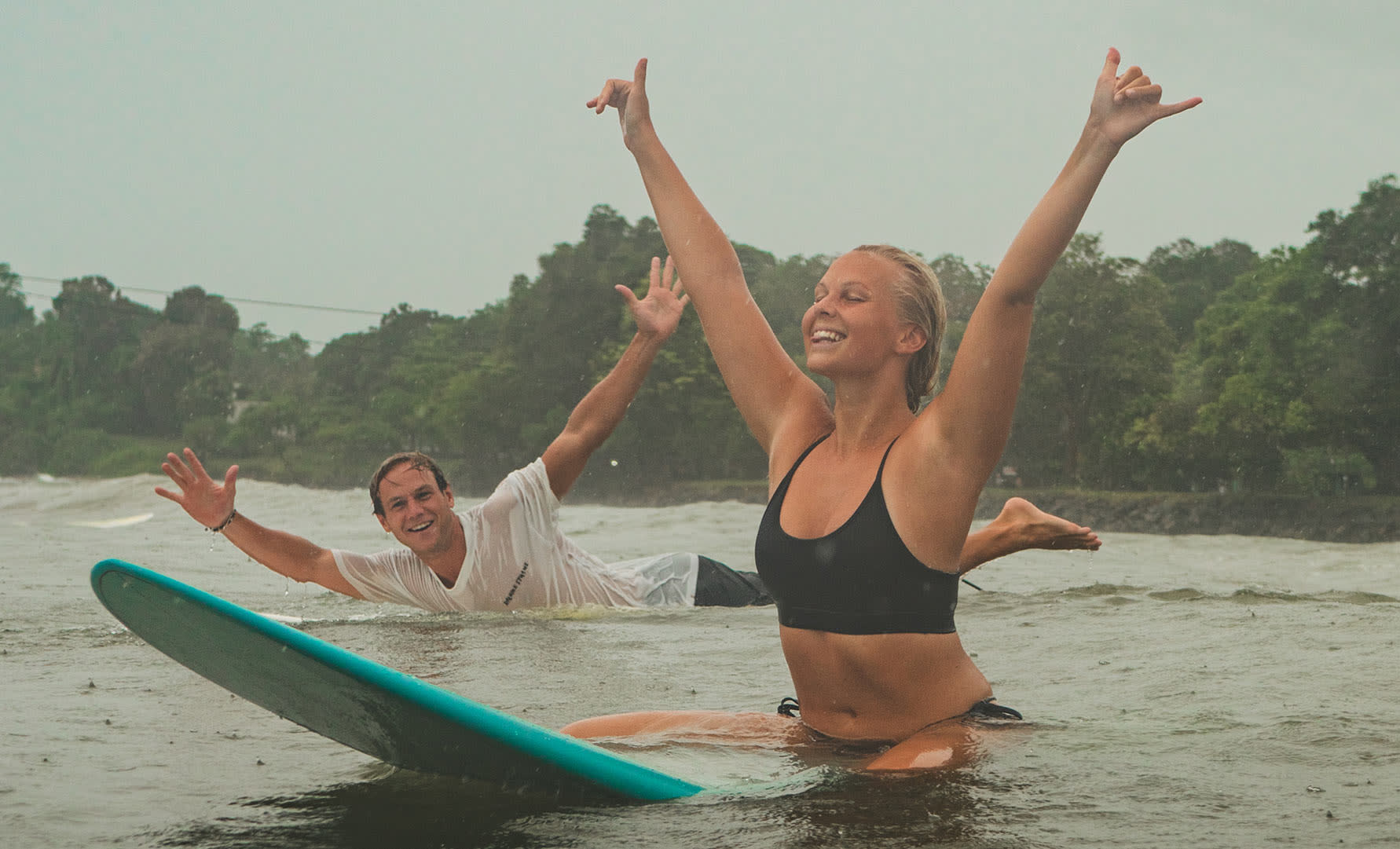
Sri Lanka sits close enough to the equator that the temperature barely moves. Expect around 27°C, in the water and out of it, whichever month you land. In the south of the island, where our camp is based, the dry season runs from December through March.
That's the window that tends to bring the most consistent, learner-friendly swell alongside reliably sunny days. May through September is the wet season, or the green season, as we call it around camp. Most days are still sunny, with the rain usually showing up as a short, warm burst in the afternoon rather than settling in for the day.
The swells do pick up in size during these months too, which more experienced surfers tend to love, but our surf coaches adjust every lesson to the day's conditions, so there's still plenty of gentle water for beginners to learn in. Honestly, there's no bad time to start!
What a beginner surfing week actually looks like at Lapoint
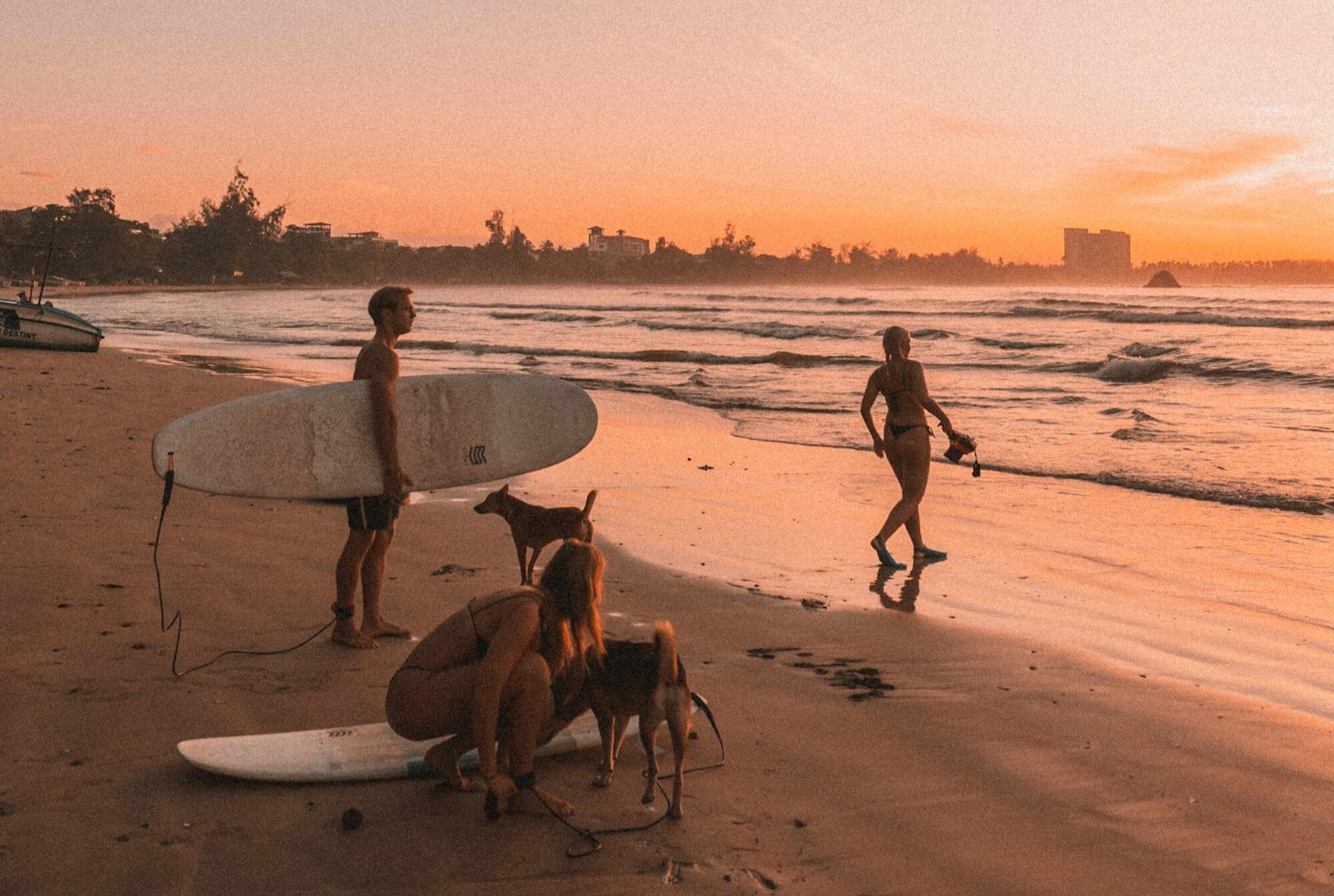
Lessons start in the white water, not out the back, learning to read the wave and time your pop-up before you're dealing with an actual breaking face. Our local coaches choose a board suited to where you're at, and you get to try out a few different ones over the week to see what actually feels right under your feet.
Depending on your surf package, your week includes group lessons, time to free surf on your own, surf theory, and video analysis to help you actually see your progress. You can also try surf skating, a fun way to work on your pop-up and balance when you're out of the water.
Is it Safe to Surf in Sri Lanka?
Yes, especially with proper instruction. Learning on a gentle, sandy bottomed wave with a qualified coach watching you is one of the easiest ways to get started with a new sport. Reef shoes are handy on rockier stretches, and the sun here is stronger than most first timers expect, so a little extra sun protection goes a long way.
Your instructor will also show you how to read the water and understand the waves from day one. Honestly, this is the easy part. Good coaches read the ocean for you while you learn, leaving you free to enjoy the experience and focus on the best part: catching your first wave!
A few local tips before you go
Stick to bottled or filtered water, even locals do the same in most towns.
The pace here runs slower than you're probably used to. Lean into it rather than fighting it, "island time" is real.
A light cover-up is appreciated if you're wandering through town or visiting a temple, even though boardshorts and bikinis are completely normal right at the beach.
Tipping isn't mandatory but is genuinely appreciated, a small note for your driver, or wherever you ate goes a long way.
The usual lineup etiquette applies here like anywhere: don't drop in on someone already riding a wave, and let people know you're new so more experienced surfers can help keep you out of the way.
Sri Lankan Rupees are the local currency, and cash is still king outside the bigger towns, so keep some on hand.
Come Learn to Surf With Us in Sri Lanka

Ready to swap your suitcase for a surfboard? 🏄 Come find us in Ahangama! However you want to spend the week, more lessons, a slower pace with yoga folded in, or guided sessions once you've got some experience under you, we've got a surf package built around it. Most of our favorite people at camp started exactly where you are now, never having stood on a board before!
NEWSLETTER
STAY UP TO DATE

Aude St-Cyr
About the author: Hi, I’m Aude, originally from Quebec, but the last decade has taken me across Europe and slowly closer to the ocean. I’m drawn to quiet streets, slow mornings, tiny bookstores, and the kind of places where you can lose track of time for a while. When I’m not travelling, you’ll usually find me surfing in Peniche, trying a new recipe, or wandering around with my analog camera, saving little pieces of life for later.
I write content for Lapoint, edit videos, and help grow our community, which means most days involve a mix of words, stories, people, and way too many tabs open at once!
Life goal? To take care of the people and places I love, stay curious, and never lose touch with my inner child.
Latest blogposts

October 14, 2026
